

- DATE: January 12th
- TIME: 12PM US ET
- REGISTER HERE
Please join the DC CFAR Women & HIV Scientific Interest Group and Harvard University CFAR Co-Led Inter-CFAR Collaboration on HIV Research in Women Working Group for a co-sponsored virtual seminar featuring Dr. Marielle Gross, Assistant Professor at Temple University and Founder and CEO of de-bi, co., on January 12th, 2026 from 12:00 – 1:00 PM.
Dr. Gross will present, “Decentralized Biobanking for Transparency, Trust, and Justice in HIV Research,” an overview of the unique applications, implications, and challenges for implementing decentralized biobanking for HIV research, followed by a mediated discussion.
| Meet the Speaker |
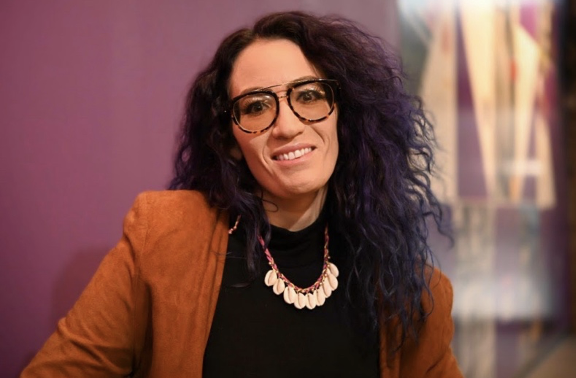 Dr. Marielle S. Gross is Founder and CEO of de-bi, co., pioneering decentralized biobanking solutions that link patients, scientists, and clinicians to build a more inclusive and equitable research ecosystem. An Assistant Professor (Adjunct) at Temple University and a rural obstetrician-gynecologist, Dr. Gross is recognized for her leadership in advancing structural justice for people living with HIV in breastfeeding and assisted reproduction domains. Her interdisciplinary work, spanning bioethics, blockchain technology, and privacy-preserving systems, aims to overcome distrust and fragmentation in biomedical research through accountable, patient-centered innovation. An alumna of Columbia, NYU, the University of Florida, and Johns Hopkins, and a named inventor on several patents, Dr. Gross is committed to embedding trust, transparency, and inclusion in biomedical science and healthcare. |
Decentralized Biobanking for Transparency, Trust, and Justice in HIV Research
“Patients who donate biosamples or data for research do not learn what becomes of their contributions, even if the science they enable changes the world or has the potential to save their own life. This broken feedback loop between patients and science is a byproduct of outdated ethical frameworks and research methods that strip patient identifiers to protect privacy, sacrificing the patient’s voice, hindering ongoing collaboration, and blocking direct translation of benefits from bench to bedside. What if patients could be recognized and included throughout the research process, while ensuring their privacy is preserved? We are developing decentralized biobanking technology to reconnect patients to their specimens, allowing sample tracking, community engagement and benefit sharing via a secure digital platform. By bridging patients, samples, and scientists, we can foster respect, rebuild trust, unlock health insights, and create opportunities for shared governance, prosperity, and progress. In this talk, we will review underlying principles for decentralized biobanking, demonstrate a live de-bi app currently in use for fallopian tube research, highlight findings from an ongoing national survey, and discuss the unique applications, implications, and challenges for implementing decentralized biobanking for HIV research.”